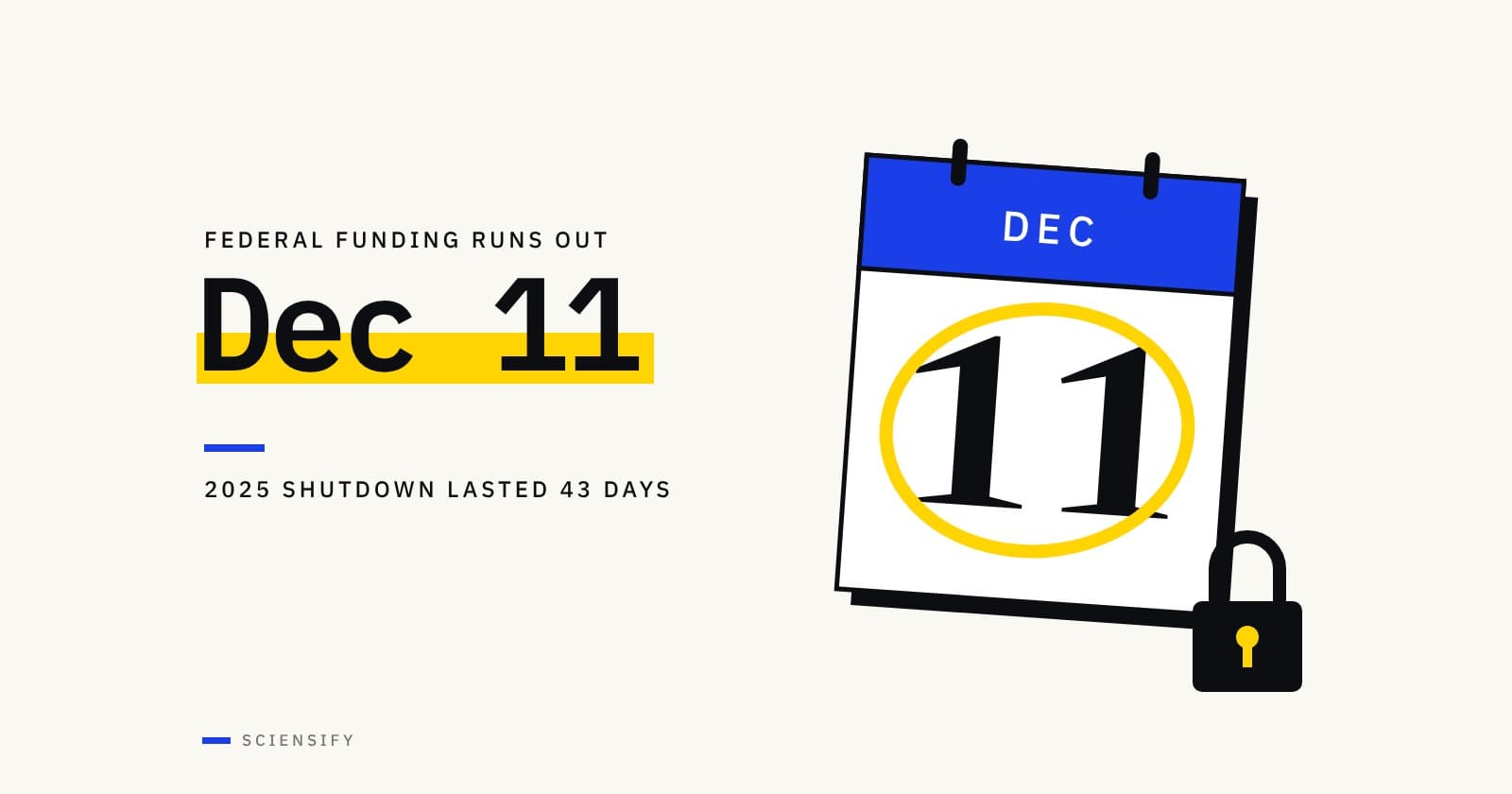
The money that keeps most of the federal government running expires on Friday, December 11, 2026, and it is not yet clear that Congress will extend it. Some Senate Democrats say they will vote against any stopgap bill that does not limit spending on the war with Iran, and Republicans warn that this demand makes a shutdown more likely, Bloomberg and The Hill reported. History offers some comfort for investors: during past shutdowns, including the record 43 day closure in 2025, the S&P 500 usually ended up slightly higher, though economists estimate each week of closure costs the economy real output.
The deadline: December 11
In September, Congress passed a short-term funding bill, called a continuing resolution or stopgap, that keeps agencies running at current levels. The Senate approved it 90 to 6 and the House 370 to 48, and President Trump signed it into law, according to Yahoo News. It runs until at least December 11. Government Executive reported that it was meant to buy time past the midterm elections for a full spending deal for fiscal 2027, the budget year that began October 1.
That full deal has not happened. Lawmakers are far from an agreement, and leaders in both parties have reportedly backed another short-term bill that would run past the current session, The Hill reported. If no new funding law is in place by December 11, agencies without money would have to shut down.
Most reports, including Bloomberg, The Hill and ABC11, give the deadline as December 11. A few smaller outlets have cited December 3 or December 10; we did not find those dates in major reporting.
What the fight is about
The dispute centers on money for the war involving Iran. The Pentagon put the war's cost at $47.1 billion by mid October, KCRA reported. The White House has asked Congress for a supplemental funding package that includes tens of billions of dollars for the war, and President Trump also wants about $350 billion in extra defense money passed through budget reconciliation, a process that needs only a simple majority in the Senate, The Hill reported.
Here is where the main players stand, based on published reports.
Democrats pushing for war limits. Senators Chris Van Hollen, Bernie Sanders, Michael Bennet and Tammy Duckworth say they will oppose any stopgap that leaves the administration free to spend appropriated money on the war, The Hill and Yahoo News reported.
Democratic leaders, not yet committed. Senator Patty Murray, the top Democrat on the Senate Appropriations Committee, has said Democrats will not approve the supplemental war money, but she favors a short bill that carries the government into next year, according to The Hill. House Democratic leader Hakeem Jeffries declined to rule out forcing a shutdown over the war. Senate Democratic leader Chuck Schumer has not said whether Democrats will insist on war language, and Senator Chris Coons has warned against risking a shutdown, KCRA reported.
Republicans warning of a shutdown. Senator Mike Rounds said the Democratic push would "absolutely" raise the risk of a shutdown, and Senator John Kennedy said that if Democrats make funding depend on "cutting and running," there will be a shutdown, KCRA and The Hill reported.
Warnings about the reconciliation plan. Democratic Senator Mark Warner said passing defense money through reconciliation would "poison the well" for a funding deal, and Rounds also said it would raise shutdown risk. The Hill reported that Senate Majority Leader John Thune, a Republican, has privately discouraged a partisan reconciliation package in the lame duck session (The Hill).
Reports differ on the odds. The Hill reported that senators in both parties expect a deal to come together behind the scenes, while other outlets describe Democratic leaders as undecided about risking a shutdown.
Why the lame duck session matters
A lame duck session is the stretch between an election and the day the new Congress takes office. Democrats won both the House and the Senate on November 3, as we explain in our midterms article, but the new members are not seated until January. So the December 11 deadline falls to the outgoing Congress, which returned the week of November 9 with a crowded agenda, ABC11 reported.
That timing shapes the choices. A stopgap needs 60 votes in the Senate, so Republicans need Democratic votes to pass one. Bloomberg reported that one path being discussed would push the next deadline into early spring, after the new Congress is seated (Bloomberg). Lawmakers also need to pass the annual defense policy bill, known as the NDAA, before the end of the year, and the war funding dispute could spill into that debate too, The Hill reported.
Is the debt limit involved?
Not directly. A shutdown happens when Congress does not pass spending bills. The debt limit is a separate cap on how much the Treasury can borrow to pay bills Congress has already approved.
The limit was last raised, by $5 trillion, in the tax and spending law President Trump signed in July 2025. Fortune reported on November 9 that Bank of America analysts now expect the US to reach the limit as early as February 2027, sooner than they had forecast. After that, the Treasury can keep paying bills for some months using accounting steps known as extraordinary measures. Goldman Sachs estimates that an increase must be agreed no later than October 2027, and its analysts wrote that Republicans are likely to try to raise the limit before the end of this year but are unlikely to succeed, according to Fortune. Nothing has been scheduled.
What a shutdown stops, and what it does not
A shutdown is not a full stop. These are the main effects reported in past shutdowns:
- Social Security: benefit payments continue because they are mandatory under law, but some services, such as benefit verifications, can stop, NBC News reported.
- The military: service members keep working but are not paid until funding returns. The law requires back pay once the shutdown ends (NBC News).
- Air travel: air traffic controllers are considered essential and keep working without pay. In 2025 the Transportation Department stopped hiring and field training of new controllers (NBC News).
- Economic data: the Bureau of Labor Statistics stops work. In 2025, the October jobs report and October consumer price index were canceled, and some October figures were never collected, Axios reported. Bloomberg Government reported at the time that the White House said both were unlikely to be released. Nearly two dozen reports were delayed.
- The SEC and IPOs: most staff reviews pause. In October 2025, SEC staff said companies could let a registration statement take effect automatically 20 days after filing, which let some IPOs go ahead, according to law firm Skadden. The Anthropic IPO is scheduled before the December deadline; see our Anthropic IPO article.
A data blackout would matter more than usual this time. The Fed is expected to weigh another rate increase at its December 8 to 9 meeting, as we explain in our Fed article, and a long shutdown in 2026 could leave it with less data for its next decisions.
How stocks did in past shutdowns
| Shutdown | Dates | Length | S&P 500 during |
|---|---|---|---|
| 2018 to 2019 | December 22, 2018 to January 25, 2019 | 35 days | up 10.3% (Kiplinger) |
| 2025 | October 1 to November 12, 2025 | 43 days | up 2.4% to 2.5% total return (Kiplinger, Fisher) |
| 2026, partial | January 31 to February 3, 2026 | 4 days | not found |
2025. The longest shutdown in US history ran from October 1 to November 12, 2025. Fisher Investments, using FactSet data from September 30 to November 12, put the S&P 500's total return at 2.5%, and the 10 year Treasury yield started and ended near 4.1% (Fisher Investments). Kiplinger put the gain at 2.4%. Bloomberg, writing on November 11 before the deal was done, said the index had added 0.6% in the 40 days since the closure began. Some trackers count the closure as 44 days.
2026. A short partial shutdown began at 12:01 a.m. on Saturday, January 31, after the Senate passed a funding package 71 to 29 but the House could not vote in time, ABC News 4 reported. The House approved the roughly $1.2 trillion package 217 to 214 on Tuesday, February 3 (Deseret News), and President Trump signed it that day, ending a four day shutdown (WJLA). It started on a weekend, and we did not find reporting on how stocks did over those days.
Earlier shutdowns. The 2018 to 2019 closure was the best for stocks among shutdowns and funding gaps, with a 10.3% gain, according to Kiplinger.
The long view. Carson Group data cited by Kiplinger shows the S&P 500 rose during 57% of shutdowns since 1976, with an average gain of 0.4%. Other counts differ slightly because they use different dates. In other words, shutdowns have not reliably moved stocks either way, and other news has usually mattered more. Past results do not predict what will happen this time.
What economists say a shutdown costs
The Congressional Budget Office, Congress's nonpartisan budget scorekeeper, estimated in October 2025 that a shutdown would permanently reduce real economic output by $7 billion if it lasted four weeks, $11 billion if it lasted six weeks and $14 billion if it lasted eight weeks, Axios reported. The CBO expected most of the lost activity to be made up after reopening. The permanent part comes mostly from work furloughed employees never did.
Those figures were for 2025. We did not find a CBO estimate for a shutdown starting in December 2026.
What markets are watching now
Washington is one of several worries for investors. Stocks fell sharply after the midterms, and CNBC noted the S&P 500 had topped 7,800 in October before the drop (CNBC). We cover that sell-off in our AI stocks article. We found no major outlet estimate of how much of the recent swings, if any, came from the funding fight.
What we know and what we do not know
What reports confirm:
- Current funding runs until December 11, 2026 (Yahoo News, Bloomberg).
- Four Democratic senators say they will oppose a stopgap without war limits (The Hill).
What is not known:
- Whether Democratic leaders will insist on war language.
- Whether a stopgap passes, and how long it would last.
- Whether the debt limit is taken up this year.
What to watch next
- November and early December: lame duck negotiations on a stopgap, the defense policy bill and the war supplemental.
- Tuesday, December 8 to Wednesday, December 9: the Fed's rate meeting.
- Friday, December 11: current funding expires.
- January 2027: the new Congress, with Democratic majorities, takes office.
- Early spring 2027: a possible next deadline if a stopgap passes, as Bloomberg reported.
- 2027: the debt limit, which Bank of America expects the US to reach as early as February (Fortune).
Sources
- Shutdown Risks Emerge as Democrats Consider Ways to End Iran War
- Senate Democrats seek to leverage Dec. 11 funding deadline to end Iran war
- GOP senators warn Trump push for Pentagon funding risks shutdown
- Defense spending talks face partisan clash in Congress: Five takeaways
- Iran war raises government shutdown risk, some lawmakers say the risk is worth taking
- Dems demand government funding stopgap include ban on Iran spending
- Congress returns for crowded lame-duck session as Hegseth impeachment, government funding deadline loom
- Trump signs stopgap funding bill into law, temporarily avoiding shutdown
- Shutdown threat possibly lifted as House passes stopgap spending bill
- Further turmoil could be in store for tech stocks. What to watch in the week ahead
- US debt limit will arrive soon, and X-date could get 'uncomfortably close' when Congress is on break
- Stocks Rallied Through Shutdown But Wall Street Eyes More Gains
- The Long Shutdown's Little Lasting Effect
- What Does a Government Shutdown Mean for Stocks?
- Partial government shutdown in effect over debate about funding DHS
- House votes to end shutdown
- 'Great victory' for America: Trump signs spending bill to end government shutdown
- Economy could lose $14 billion from prolonged government shutdown, CBO warns
- The shutdown-imposed data gap could be permanent
- October Jobs, CPI Unlikely to Be Released, White House Says
- Government shutdown 2025: What to know on airports, travel, social security, student loans, military, SNAP and more
- New SEC Guidance Allows Companies To Proceed With IPOs During Government Shutdown