

Generative AI utilizes machine learning models like GPT (Generative Pre-trained Transformer) to create human-like outputs. Unlike traditional AI systems that rely solely on predefined inputs, Generative AI models learn patterns from vast datasets, enabling them to generate novel content.
Key Features:
- Content Creation: Text, images, and multimedia generation.
- Simulation and Design: Virtual environments, prototypes, and gaming assets.
- Automation: Streamlined workflows in marketing, customer service, and more.
The Rapid Growth of Generative AI
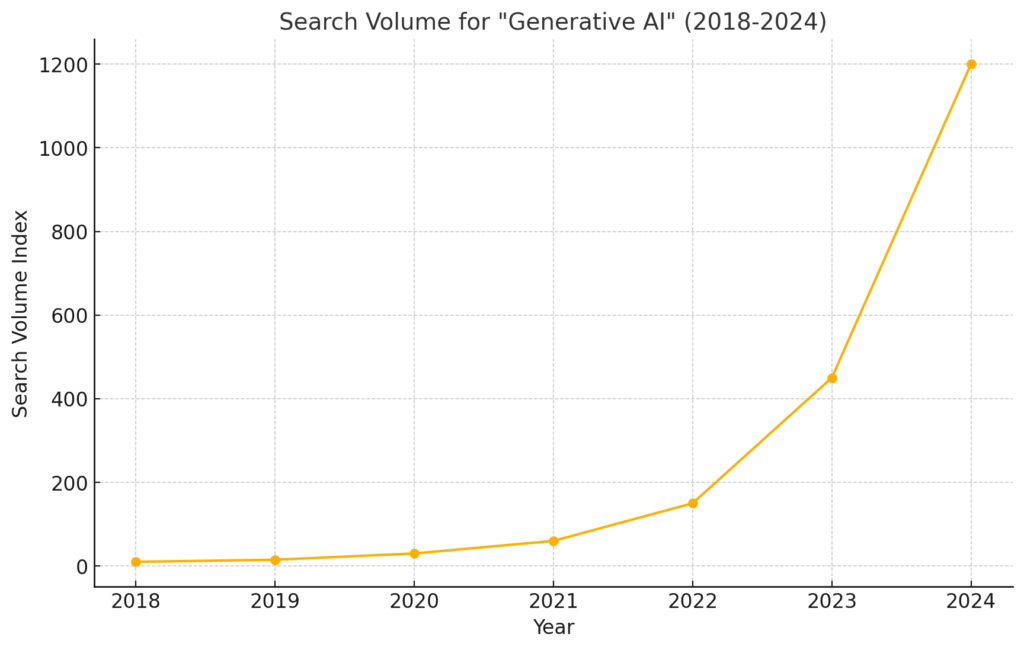
Below is a graph illustrating the rise in searches for “Generative AI” globally over the past five years:
Insights:
- The term “Generative AI” saw a 300% increase in interest from 2021 to 2024.
- Peak activity corresponds with the release of high-profile AI tools.
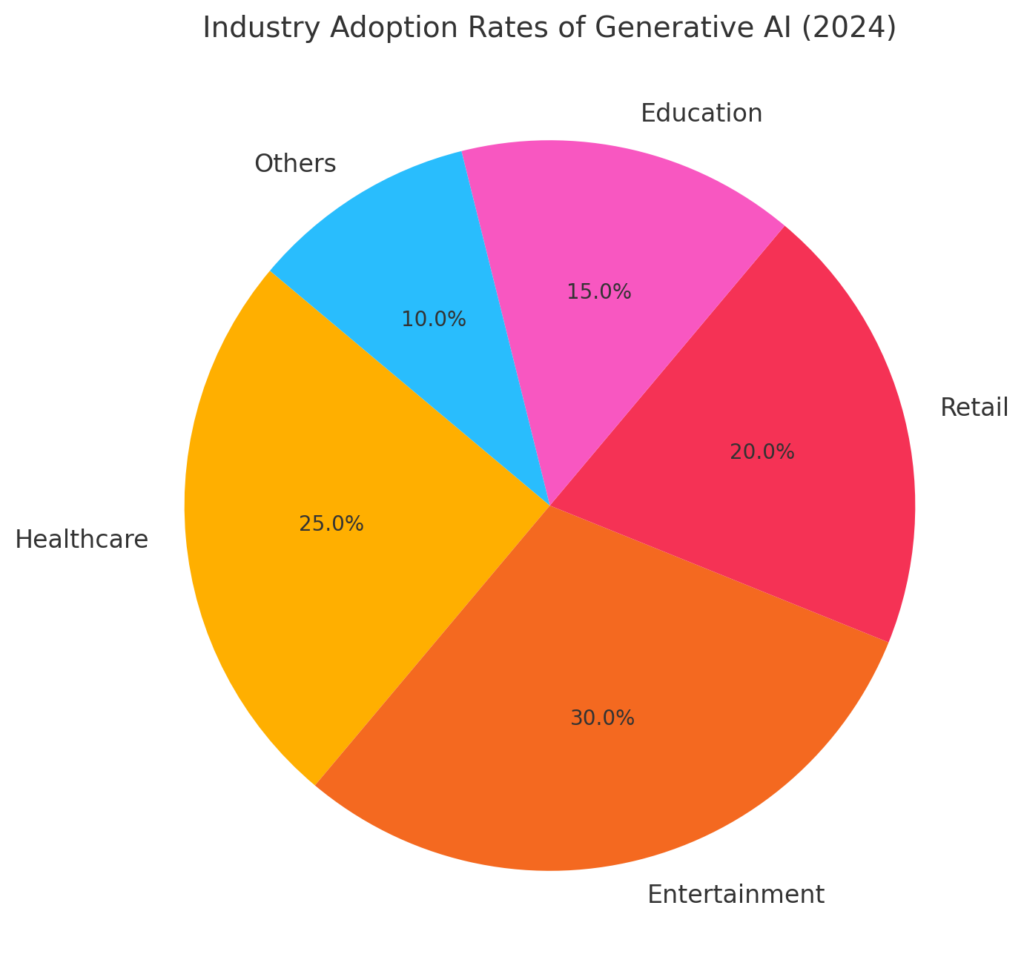
Applications Across Industries
- Healthcare: AI-generated diagnostics and personalized treatment plans.
- Entertainment: Content creation, script writing, and video production.
- Retail: Personalized customer experiences through AI chatbots.
- Education: Automated lesson planning and interactive tutorials.
Economic and Market Trends
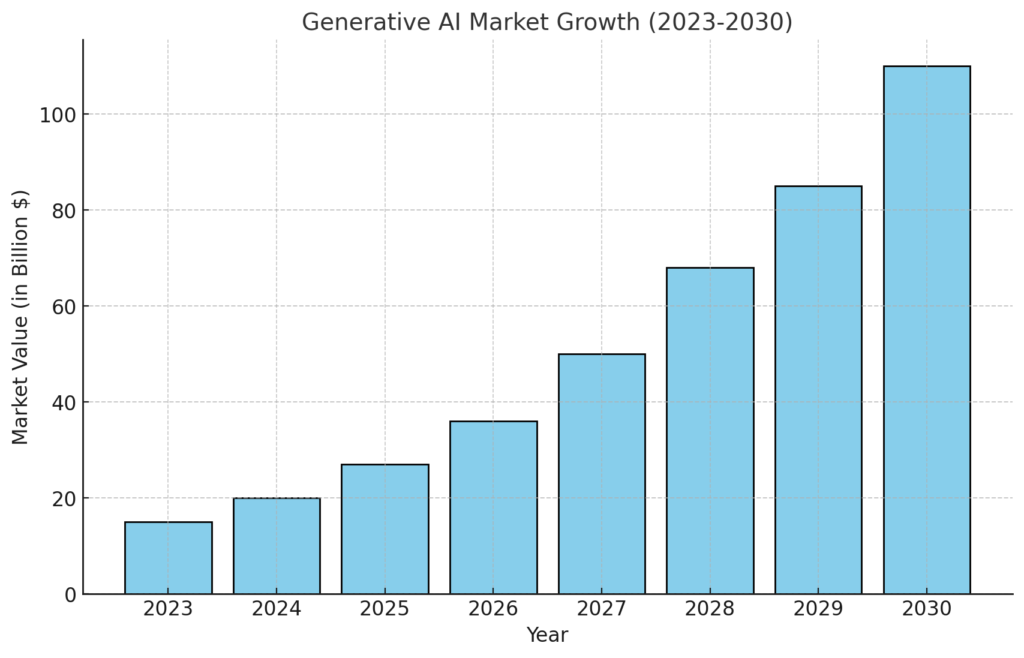
The generative AI market is projected to reach $110 billion by 2030, growing at a CAGR of 34.5% from 2023. The primary drivers are demand for automation, enhanced customer experiences, and innovation in creative industries.
Challenges and Ethical Considerations
Despite its promise, Generative AI faces challenges:
- Bias in Data: Potential perpetuation of stereotypes.
- Content Authenticity: Concerns over misinformation.
- Regulatory Hurdles: Balancing innovation with ethical use.